Tracing How Geolocation Tools Enforce Regional Access Rules Across Networked Interactive Betting Platforms
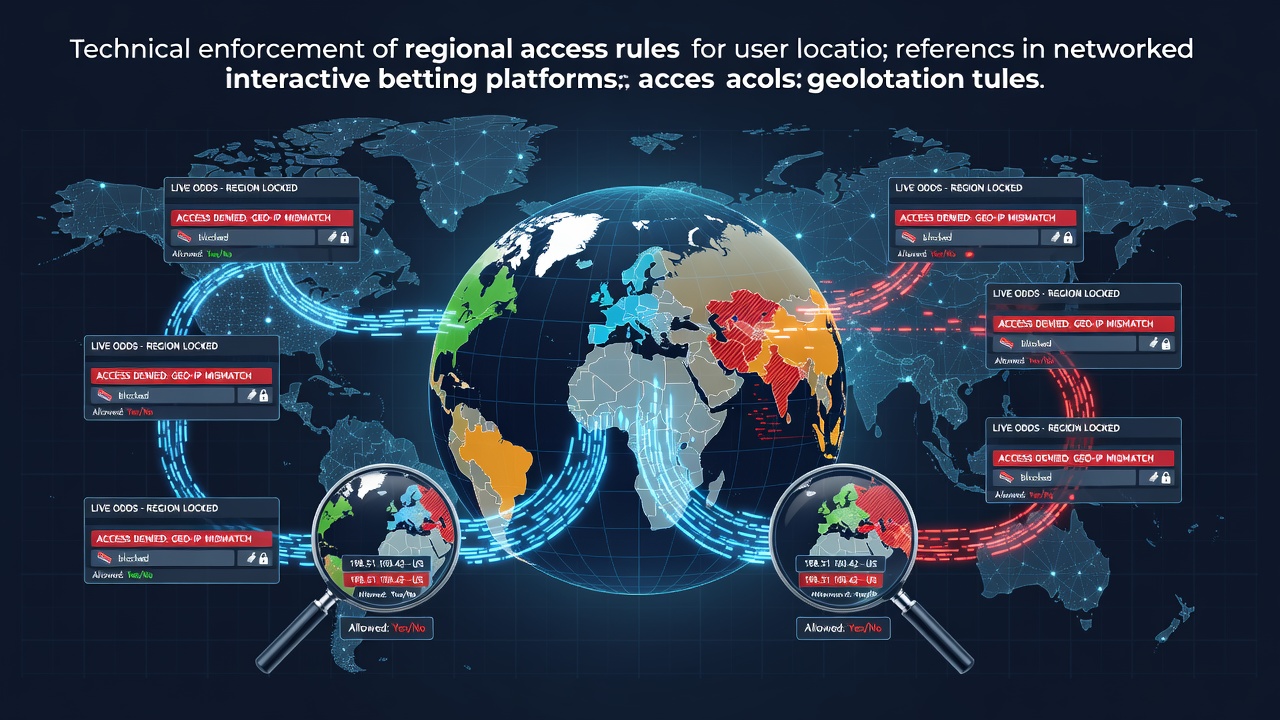 Geolocation tools operate at the core of compliance systems that networked interactive betting platforms rely on to restrict access according to jurisdictional boundaries, and these mechanisms combine multiple data layers to verify user location before any wagering activity begins. IP address mapping serves as the initial filter in most architectures while GPS coordinates from mobile devices provide secondary confirmation, and operators cross-reference these signals against preloaded regulatory databases that update in real time. Network providers feed cell tower data and Wi-Fi hotspot locations into the same verification stack, which reduces the chance that a user can bypass restrictions through basic proxy attempts. Regional rules dictate how strictly these checks must occur, and in many North American jurisdictions operators must re-verify location every few minutes during active sessions. European frameworks often require less frequent polling yet still mandate that platforms block traffic originating from unlicensed territories. Australian regulators enforce similar controls under the Interactive Gambling Act amendments, and Canadian provincial systems tie geofencing directly to licensing agreements that list permitted provinces. Data from the National Council of Problem Gambling indicates that accurate location enforcement correlates with measurable reductions in unauthorized cross-border play attempts. Platforms integrate third-party geolocation services that maintain proprietary databases of IP ranges, and these vendors update their records daily to account for new ISP allocations. When a discrepancy appears between reported GPS coordinates and IP location, the system triggers additional checks such as Bluetooth beacon detection or accelerometer analysis to confirm the device remains within approved borders. Operators log every verification event, which creates audit trails that regulators examine during compliance reviews.
Technical Layers Behind Access Control
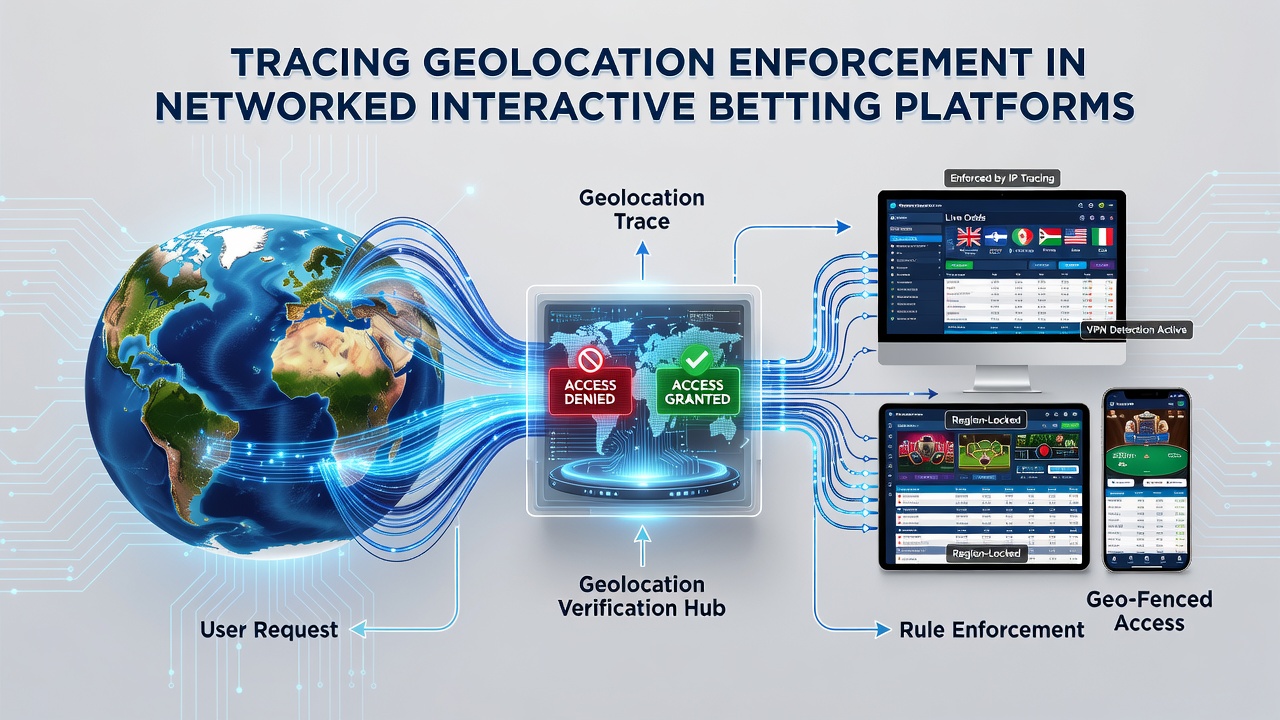
Multiple signals combine to create a composite location profile, and each layer adds redundancy against common evasion tactics. IP geolocation delivers broad country and state resolution while GPS offers meter-level precision on mobile devices, and Wi-Fi positioning fills gaps when satellite signals weaken indoors. Behavioral analytics further refine the process by flagging sudden location jumps that exceed realistic travel speeds, which prompts temporary session holds until the user re-authenticates.
Operators deploy these tools through SDKs embedded in both native apps and browser-based clients, and the software communicates with centralized compliance servers that maintain jurisdiction-specific rule sets. When new legislation takes effect in June 2026, several U.S. states plan to expand geofencing requirements to include tribal land boundaries, and platforms must adjust their databases accordingly before the deadline. Research conducted by the University of Nevada's gaming technology lab shows that hybrid GPS-plus-IP systems achieve verification success rates above 99 percent under controlled test conditions.
Regulatory Variations Across Jurisdictions
State-level gaming control boards in the United States publish detailed technical standards that specify acceptable error margins for location services, and these documents require operators to demonstrate fallback procedures when primary signals fail. iGaming Ontario publishes similar guidelines that emphasize real-time monitoring and immediate session termination upon boundary violation. Observers note that platforms serving multiple markets maintain separate compliance modules for each region, which allows simultaneous enforcement of differing rules without code duplication.
Networked platforms that aggregate content from several providers must ensure every game title respects the strictest applicable geofence, and this requirement creates complex routing logic at the server level. When a user crosses a state line mid-session, the system detects the change within seconds and either redirects the account to a permitted market or suspends play entirely. Data shared by the European Gaming and Betting Association illustrates how cross-border operators have reduced unauthorized access incidents by integrating continuous location polling with device fingerprinting.
Challenges and Ongoing Adjustments
Advanced circumvention methods continue to evolve, and operators respond by layering additional verification techniques such as NFC tag detection near approved venues. VPN traffic faces automatic blocking through regularly refreshed blacklists, while satellite-based location spoofing triggers alerts when signal integrity checks fail. Those who manage large-scale platforms report that maintaining accurate boundary maps requires daily coordination with regulatory bodies and mapping service providers.
By June 2026 several Canadian provinces intend to harmonize their geolocation protocols under a shared technical framework, which should simplify compliance for operators active in multiple markets. Academic studies published in the Journal of Gambling Studies have examined how these evolving tools affect player behavior, and the findings indicate that transparent location policies correlate with higher trust levels among verified users. Platforms also incorporate user education prompts that explain why location access is required before any funds transfer or bet placement occurs.
Conclusion
Geolocation enforcement remains a foundational element of lawful operation for networked interactive betting platforms, and the combination of IP mapping, GPS verification, and supplementary signals creates a robust barrier against unauthorized regional access. Regulatory frameworks across North America, Europe, and Australia continue to refine technical standards, which drives ongoing investment in verification accuracy. As new rules take shape in 2026, operators will adjust their systems to maintain compliance while preserving seamless experiences for users located inside permitted boundaries.