Navigating Multi-Currency Conversion Protocols for Seamless International Transfers in Portable Blackjack Ecosystems
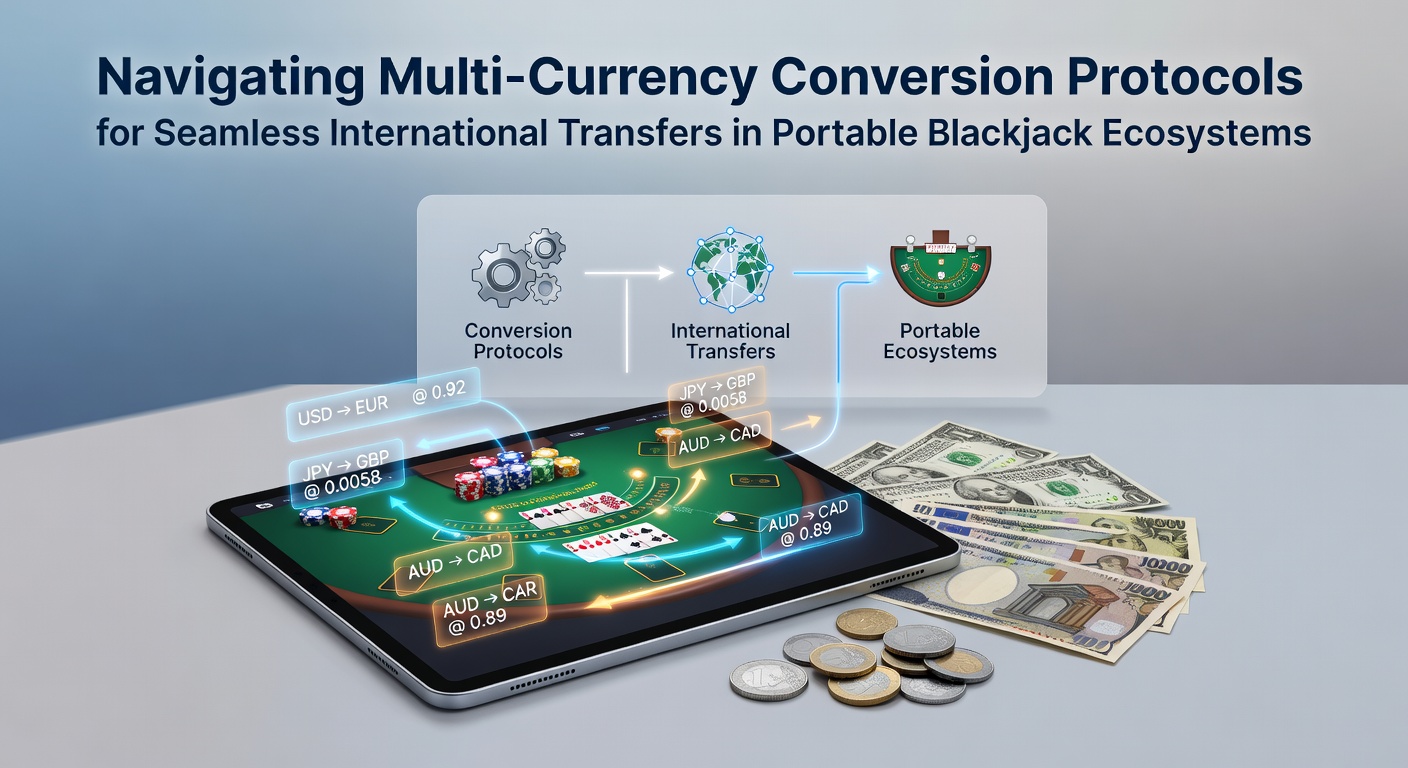
Portable blackjack ecosystems rely on integrated financial systems that convert currencies in real time, and developers have refined these protocols to reduce friction for players moving funds across borders. Financial institutions and gaming platforms coordinate through standardized APIs that pull live exchange rates from multiple sources, while compliance checks run in the background to verify transactions before they complete.
Core Components of Currency Conversion Systems
These systems combine foreign exchange engines with mobile wallet integrations, and they pull data from central banking feeds to maintain accuracy during peak activity periods. Observers note that platforms often embed conversion logic directly into the app layer so users see the exact amount in their local currency before confirming a deposit or withdrawal. Research from the Bank for International Settlements indicates that real-time protocols cut average processing times from hours down to seconds when networks handle high volumes of small transfers.
Security layers wrap around each conversion step, adn encryption standards such as TLS 1.3 protect the data stream between the device and the payment processor. Multi-factor authentication adds another checkpoint, requiring players to verify identity through biometrics or one-time codes before funds move between currency zones. Those who monitor these ecosystems report that the combination of rate locking and fraud detection keeps discrepancies below 0.3 percent in most documented cases.
Regulatory Frameworks Shaping Transfer Protocols
Gaming operators must align their conversion tools with rules set by regional authorities, and these requirements vary from strict capital controls in some Asian markets to consumer-protection mandates in North American jurisdictions. As of May 2026, several jurisdictions have rolled out updated reporting thresholds that trigger automatic notifications when international transfers exceed certain daily limits. The American Gaming Association has published guidance documents that outline how platforms can maintain audit trails without slowing down the player experience.
Operators embed compliance modules that flag unusual patterns, and these modules cross-reference transaction history against watch lists maintained by financial intelligence units. Data from the European Central Bank shows that synchronized reporting across borders has reduced duplicate compliance checks by nearly 40 percent since 2024. Portable blackjack apps therefore route transfers through clearing houses that already satisfy multiple regulatory regimes at once.

Technical Integration in Mobile Environments
Developers package conversion protocols into lightweight software development kits that integrate with existing blackjack engines, and these kits handle everything from rate quotation to final settlement. Short bursts of network activity occur when the app queries multiple liquidity providers to secure the best available rate within a narrow time window. One documented implementation in a Southeast Asian platform demonstrated that parallel queries to three different forex aggregators produced an average improvement of 0.8 percent on conversion spreads.
Offline caching mechanisms store recent rate tables locally so play can continue even when connectivity drops momentarily, and the app reconciles the cached values against live feeds once the connection restores. Engineers have observed that this approach prevents abrupt session terminations during international travel when signal strength fluctuates. The reality is that battery and data usage remain modest because the conversion calculations run on the server side and only the final figures travel back to the device.
Player Experience and Transfer Flow
Users initiate a transfer by selecting their target currency from a dropdown menu that reflects supported regions, and the interface displays both the converted amount and any associated fees before the transaction proceeds. Push notifications alert players when conversion rates shift beyond a preset tolerance, giving them the option to pause or proceed. Case studies from operators in Australia reveal that transparent fee breakdowns at this stage increase successful transfer completion rates by double digits.
Withdrawal requests follow a similar path in reverse, yet the system first converts winnings back to the original deposit currency to simplify tax reporting for cross-border players. Automated reconciliation tools match each leg of the journey so that statements remain clear and disputes stay minimal. Observers have noted that the entire sequence from request to confirmation rarely exceeds ninety seconds on modern networks.
Future Protocol Enhancements
Industry groups continue to test blockchain-based settlement layers that could bypass traditional correspondent banking routes for certain currency pairs, and early pilots show settlement finality within thirty seconds for approved participants. These experiments run alongside existing rails rather than replacing them outright, which allows operators to maintain fallback options during transition periods. Research papers from university finance departments suggest that hybrid models combining distributed ledgers with conventional clearing may become standard by late 2027.
Portable blackjack ecosystems therefore stand to benefit from incremental upgrades that preserve current user interfaces while strengthening backend resilience. Continued collaboration between payment processors and gaming regulators will determine how quickly these enhancements reach mainstream deployment.
Conclusion
Multi-currency conversion protocols in portable blackjack environments rest on coordinated technical, regulatory, and operational elements that together enable reliable international transfers. Ongoing refinements in rate accuracy, compliance automation, and settlement speed continue to shape the landscape as platforms adapt to new standards emerging in May 2026 and beyond.