How Cross-Border Licensing Variations Spark Unique Customization Trends in Digital Table Game Interfaces Across Emerging Markets
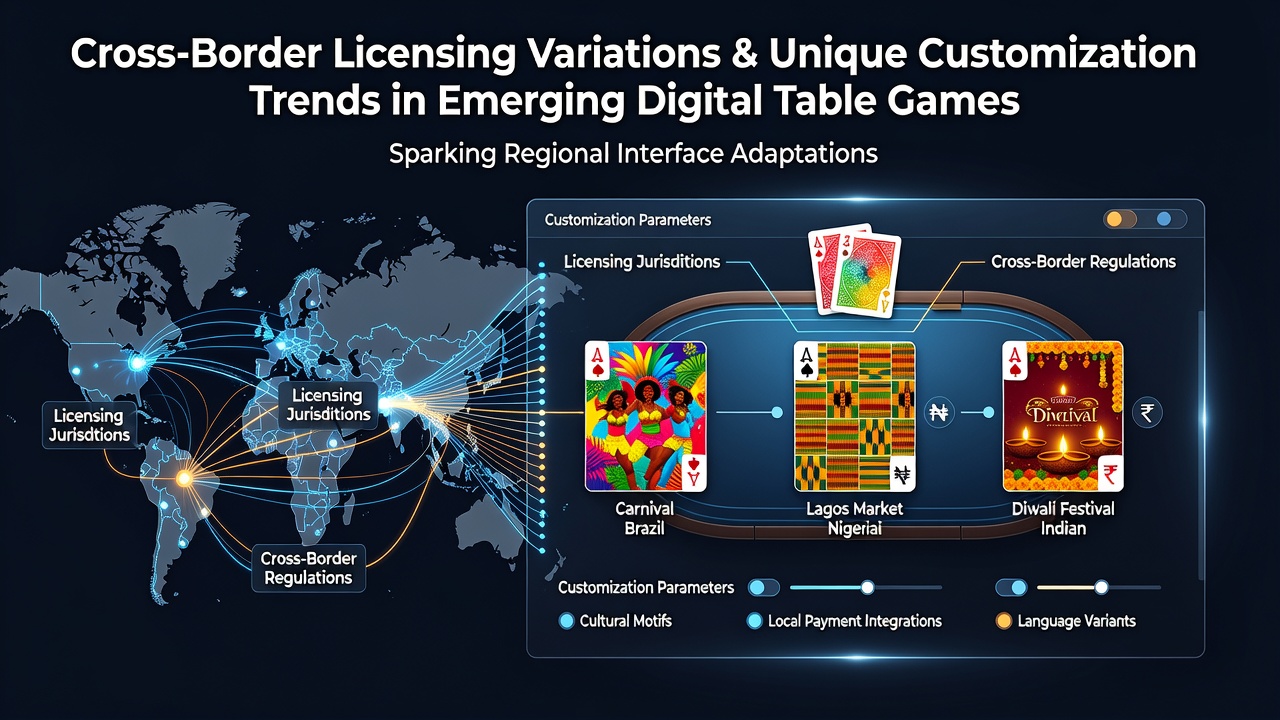
Cross-border licensing frameworks create distinct pressures on digital table game development as operators navigate varying regulatory requirements across jurisdictions, and these differences drive targeted interface adaptations in emerging markets where mobile access continues to expand rapidly. Data from industry tracking services indicate that licensing rules in regions like Southeast Asia and Latin America often mandate specific visual, functional, and transactional elements that differ sharply from those applied in established markets.
Licensing Requirements Shape Interface Design Choices
Regulatory bodies in Vietnam and the Philippines enforce rules on language support and currency display that require developers to integrate local dialects alongside dynamic conversion tools, whereas Brazilian frameworks emphasize data localization protocols that influence how player information appears during live dealer sessions. These mandates produce interfaces featuring modular layouts that operators can reconfigure without rebuilding entire platforms, allowing rapid compliance adjustments when new licensing terms take effect. Studies compiled by regional gaming associations show that such flexibility reduces deployment timelines by several weeks in multi-jurisdiction rollouts.
Payment gateway integrations represent another area where licensing variations prompt visible changes, since authorities in India and Mexico require partnerships with domestic financial systems that affect button placement, verification steps, and transaction confirmation screens. Developers respond by building selectable modules that activate or deactivate based on the player's detected location, ensuring seamless transitions between different licensing environments while maintaining core gameplay consistency for table titles like roulette and baccarat.
Cultural and Functional Adaptations Emerge in Mobile Formats
Emerging markets frequently impose content guidelines that encourage incorporation of regionally resonant symbols and color schemes into digital table interfaces, and licensing documents often specify these elements as conditions for approval. In parts of Africa and South America, operators have documented shifts toward interfaces that accommodate lower screen resolutions common on entry-level smartphones, achieved through scalable vector graphics and simplified animation sequences that preserve table game clarity without excessive data usage.
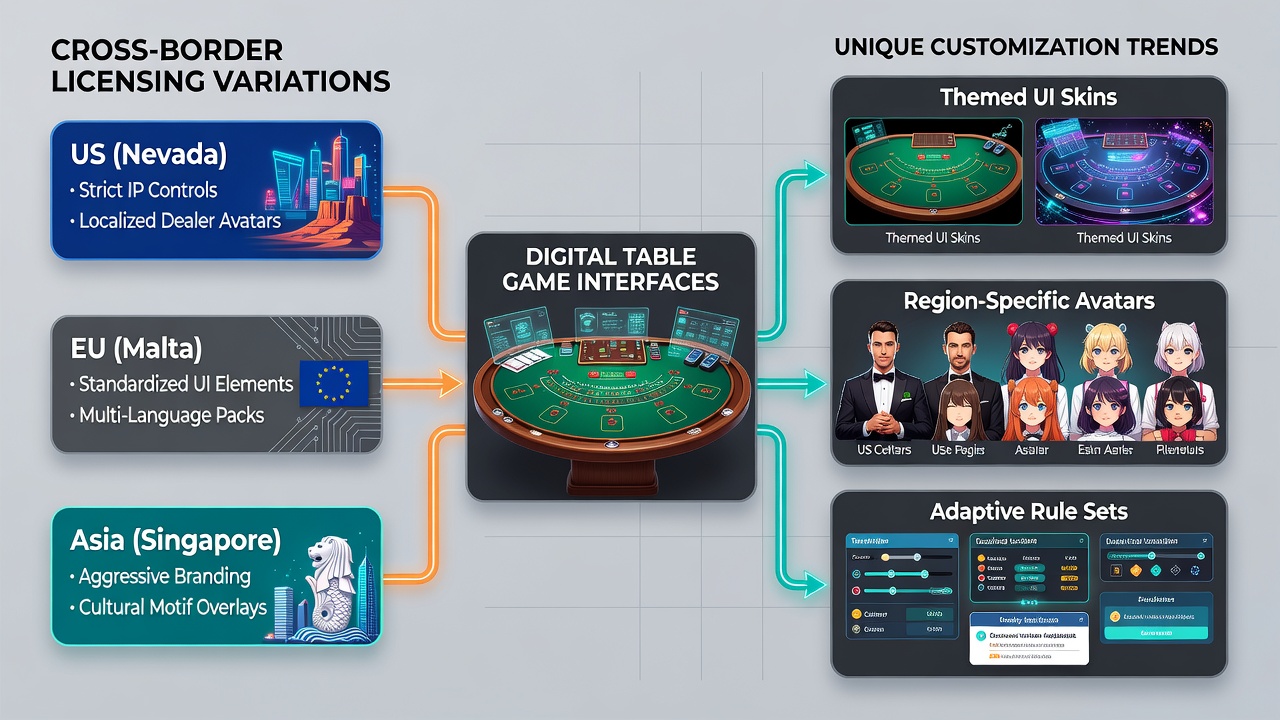
Observers note that synchronization between these custom features and centralized servers becomes critical when players cross borders, since licensing rules may restrict certain bonus displays or limit progressive jackpot participation based on the active jurisdiction. Technical reports from July 2026 highlight increased use of geofencing combined with server-side configuration files that update interface elements in real time as users move between licensed territories.
Market Data Reveals Patterns in Customization Deployment
Figures released by the Asia Gaming and Entertainment Association reveal that table game interfaces in licensed Southeast Asian markets now include an average of four to six modular customization layers per title, covering everything from avatar options to rule explanation pop-ups tailored to local legal phrasing. In parallel, Latin American operators report higher adoption rates for biometric login options where licensing frameworks prioritize identity verification standards that align with national digital ID systems.
These adaptations occur alongside broader infrastructure investments, and research conducted by university programs in Singapore and São Paulo demonstrates measurable improvements in session duration when interfaces match both regulatory and cultural expectations. Operators track these metrics through anonymized usage logs that feed back into further refinement cycles without violating data protection clauses embedded in licensing agreements.
Conclusion
Cross-border licensing variations continue to influence digital table game interfaces by compelling developers to prioritize adaptable architectures that accommodate diverse regulatory, cultural, and technical demands across emerging markets. Patterns observed through 2026 indicate sustained investment in modular design tools and real-time configuration systems that support compliance while preserving consistent player experiences. As licensing frameworks evolve, the resulting customization trends reflect direct responses to jurisdictional requirements rather than uniform global standards.