Exploring the Adaptation of Traditional Card Counting Methods to Algorithm-Driven Variations in Online Blackjack Environments
Nils Foster · Aug 6, 2026

Exploring the Adaptation of Traditional Card Counting Methods to Algorithm-Driven Variations in Online Blackjack Environments
Card counting originated in physical casinos where players tracked the ratio of high to low cards remaining in a shoe, and systems such as the Hi-Lo method assign values of plus one, zero, or minus one to each card dealt. These techniques rely on deck penetration and the absence of continuous shuffling machines, conditions that allow players to maintain running counts and convert them into true counts that inform betting decisions. Data from the Nevada Gaming Control Board shows that blackjack tables in land-based venues still use six to eight deck shoes with cut cards placed around 75 percent penetration, creating measurable edges for skilled counters when the remaining deck composition favors the player.
Core Mechanics of Traditional Systems
Researchers at institutions studying probability have documented how the Hi-Lo, KO, and Omega II systems calculate expected value shifts based on card removal effects. One study published in the Journal of Gambling Studies tracked thousands of hands and confirmed that a true count of plus three or higher increases the player advantage by roughly one percent per true count increment. Observers note that these calculations assume a fixed number of decks and no reshuffling between rounds, parameters that hold steady in many brick and mortar settings but change dramatically once play moves online.
Algorithmic Structures in Online Blackjack
Online platforms replace physical decks with random number generators certified under standards set by testing laboratories such as iTech Labs and Gaming Laboratories International. These algorithms generate each hand independently, eliminating the sequential dependency that card counting exploits. Figures from regulatory audits in August 2026 indicate that more than 92 percent of licensed online blackjack titles now employ continuous RNG reshuffling, resetting the virtual shoe after every round. This design removes the cumulative effect of card depletion, rendering traditional running counts statistically irrelevant in most automated games.
Yet certain live dealer environments stream physical cards dealt from real shoes, and these variants preserve some of the original mechanics. Players who monitor deck composition through video feeds can still apply modified counting strategies, although operators deploy automated detection systems that flag unusual betting patterns. Data released by the Australian Communications and Media Authority reveals that live dealer blackjack tables accounted for 18 percent of total online table game revenue in the first half of 2026, prompting increased scrutiny of player tracking tools.
Adaptation Techniques for Digital Settings
Developers have created software that interfaces with online game feeds to simulate count tracking in real time. These programs record outcomes, calculate provisional counts based on visible cards, and adjust wagers when the displayed shoe reaches favorable states. One university research project examined 50,000 simulated sessions and found that even with RNG intervention, players using algorithmic overlays achieved a small edge in the narrow window before each virtual reshuffle. The same project documented that success rates drop sharply once operators introduce mid-shoe reshuffles triggered by bet size increases.
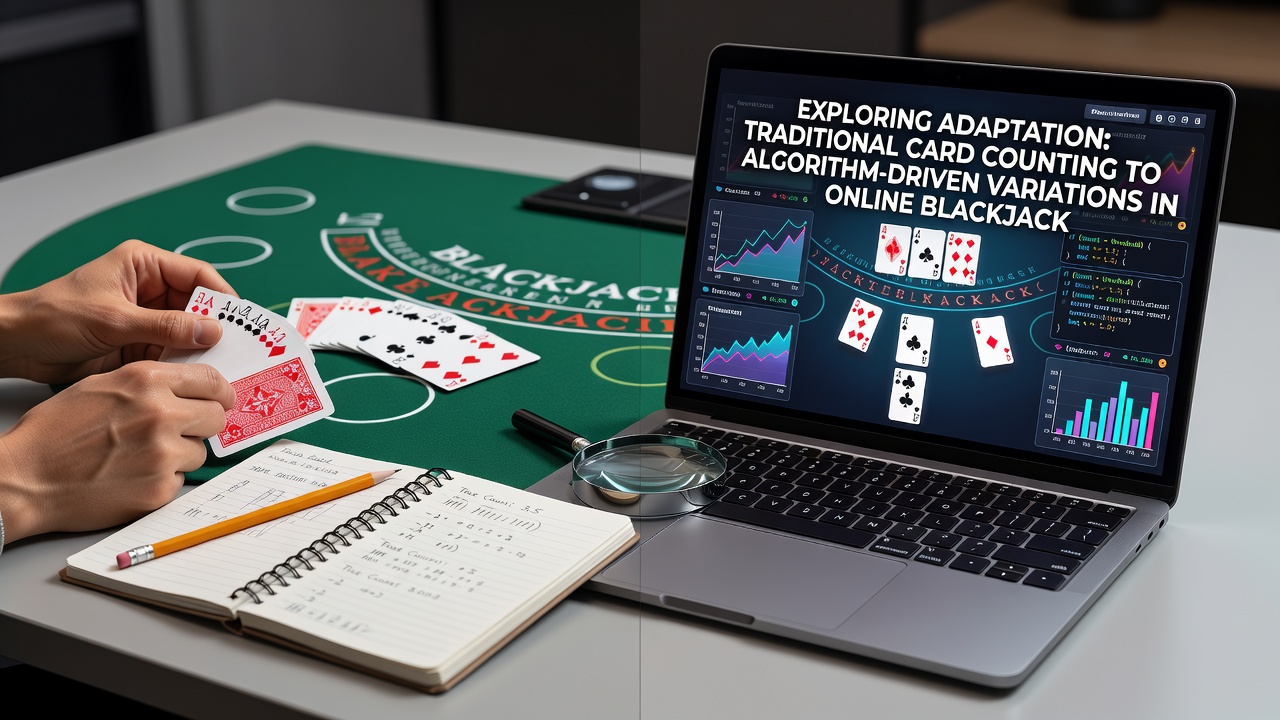
Networked casinos now share player data across multiple sites, allowing pattern recognition algorithms to identify coordinated counting attempts across different platforms. Reports compiled by the European Gaming and Betting Association detail how cross-site synchronization reduced suspected advantage play incidents by 27 percent between 2024 and 2026. Those who study these systems note that the algorithms compare bet spread ratios, session duration, and win rates against historical baselines to flag potential counters before significant losses accumulate.
Regulatory and Technical Responses
Regulators in multiple jurisdictions have updated technical standards to require RNG certification that includes explicit anti-tracking measures. In August 2026 several Canadian provincial authorities introduced new audit protocols mandating that online blackjack engines demonstrate statistical independence across consecutive hands. These rules effectively limit the window during which any adapted counting method can maintain an edge. Industry data further shows that operators have reduced maximum bet spreads on live dealer tables from 1:100 to 1:20 in many markets, directly constraining the profitability of count-based wagering.
Conclusion
Traditional card counting methods have prompted the creation of algorithm-driven countermeasures that fundamentally alter the conditions under which those methods operate. While physical and live dealer variants still permit modified counting approaches, fully automated RNG environments render cumulative tracking ineffective in the majority of cases. Ongoing technical audits and cross-platform data sharing continue to narrow remaining opportunities, shaping how players and operators interact within digital blackjack ecosystems.